aluminium

Modified Electronics and New Coin Returns

Hello!

After a break where I’ve focused on other, more important things in life for a few days, I got around to do some more building today!

It felt good actually doing something again. Building is like therapy!

First off, I was given a few aluminum … thingies .. that works extremely well to divert heat from my motor controllers!

I purchased some thermal grease and took apart the motor controllers, added a healthy amount of grease, then added more grease to the aluminum surrounds, and finally screwed these to my new heat sinks!

My first version was to screw these on the insides, in order to have more space for cool air to cool these down, but I quickly realized that I would not be able to see the status LED’s on my motor controllers!

These will do fine, and allow plenty of air to pass through.

This should make the motors to not overheat so easily… hopefully!

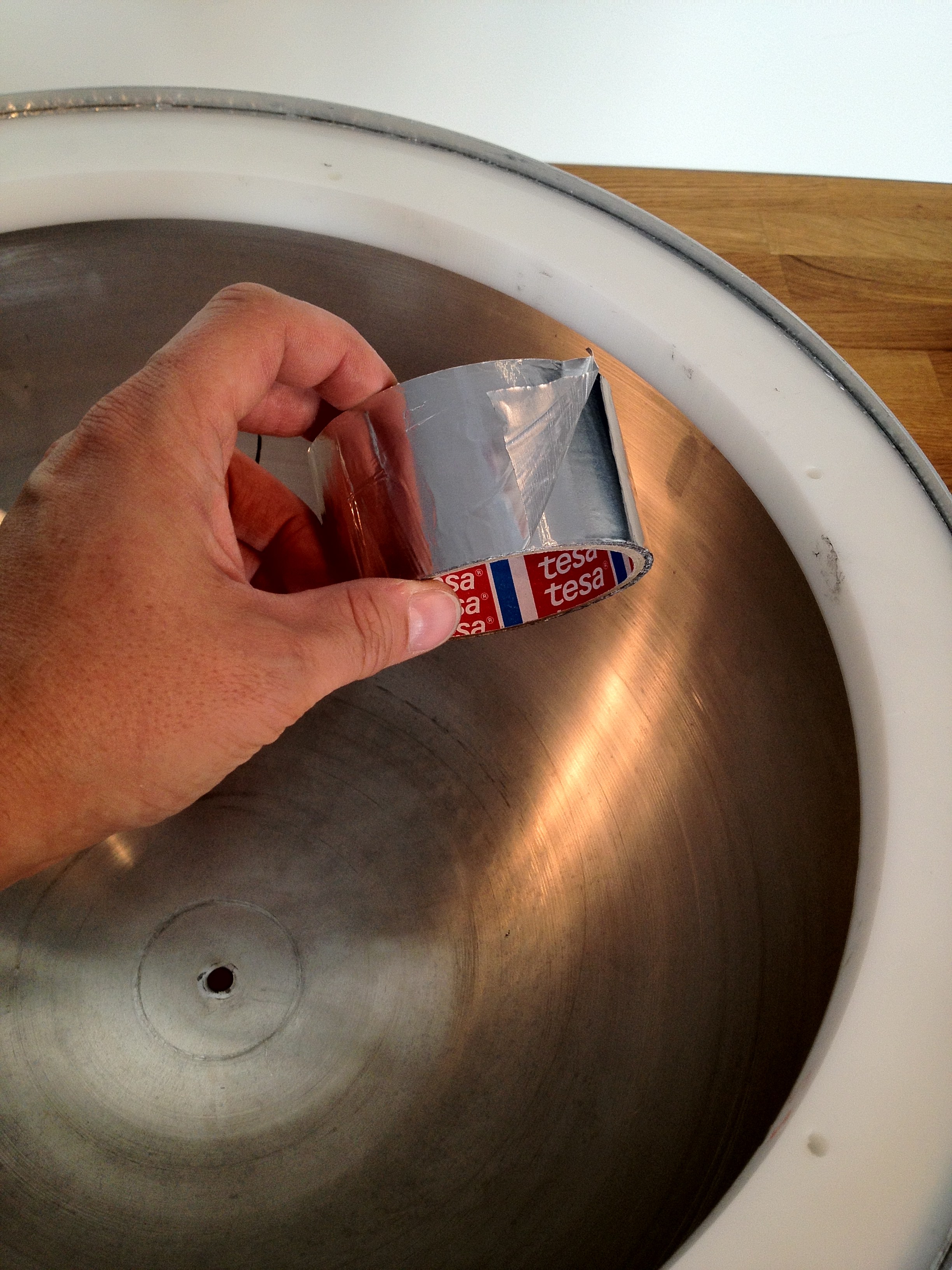
A few days ago, I picked up a 0.8 mm thick aluminum plate, and decided to try and do something with my coin returns and vents. I had made one coin return before, and the idea was simply to exchange the from plate, which was styrene with aluminum tape, with proper aluminum.

I started marking out the pieces and started cutting them out. I used the same idea as for styrene. I scored with a sharp break-blade knife and a steel ruler, and this enabled me to bend the aluminum back and forth until it snapped and gave me a very clean edge.

I scored the edges where I needed to cut out, and also masked this off with tape, to (try) to keep the aluminum surface nice and clean. At this state, I drilled holes in the corners and I bent the plates using a scrap piece from the frame as guide, and checked with the placement on the droid.

Thin aluminum was not that hard to work with, and I decided to actually try and make the entire coin return out of aluminum. I printed out some templates, glued it on the aluminum and started cutting.

I used the knife to score the edges where I wanted to bend the aluminum.

The rounded parts, I sanded off with my dremel.

Since the aluminum was scored, bending it was rather simple, but I knew I would only have one chance on bending it. If I needed to bend it back and forth, it would snap. Since this is a small detail, it does not bother me that the coin returns are scored on the back, as it is facing inside the droid, and no one will ever see it.

As you can see, the aluminum is clearly weakened where it is bent, but I plan on filling this with putty anyway, and it is not a piece that will be in any stress anyway.

Testing on the rounded piece… Yep, fits good!

All three coin return innards done. One for the front and two for the back!

The sides will simply be made slightly too large and glued on.

Once the sides are in place, time to glue the entire innards on the front plate and superglue them together.. and then add platy of tamaiya putty in order to really fix them together.

… now I know what you’re thinking….

I did not forget to actually cut out the square from the front plate!

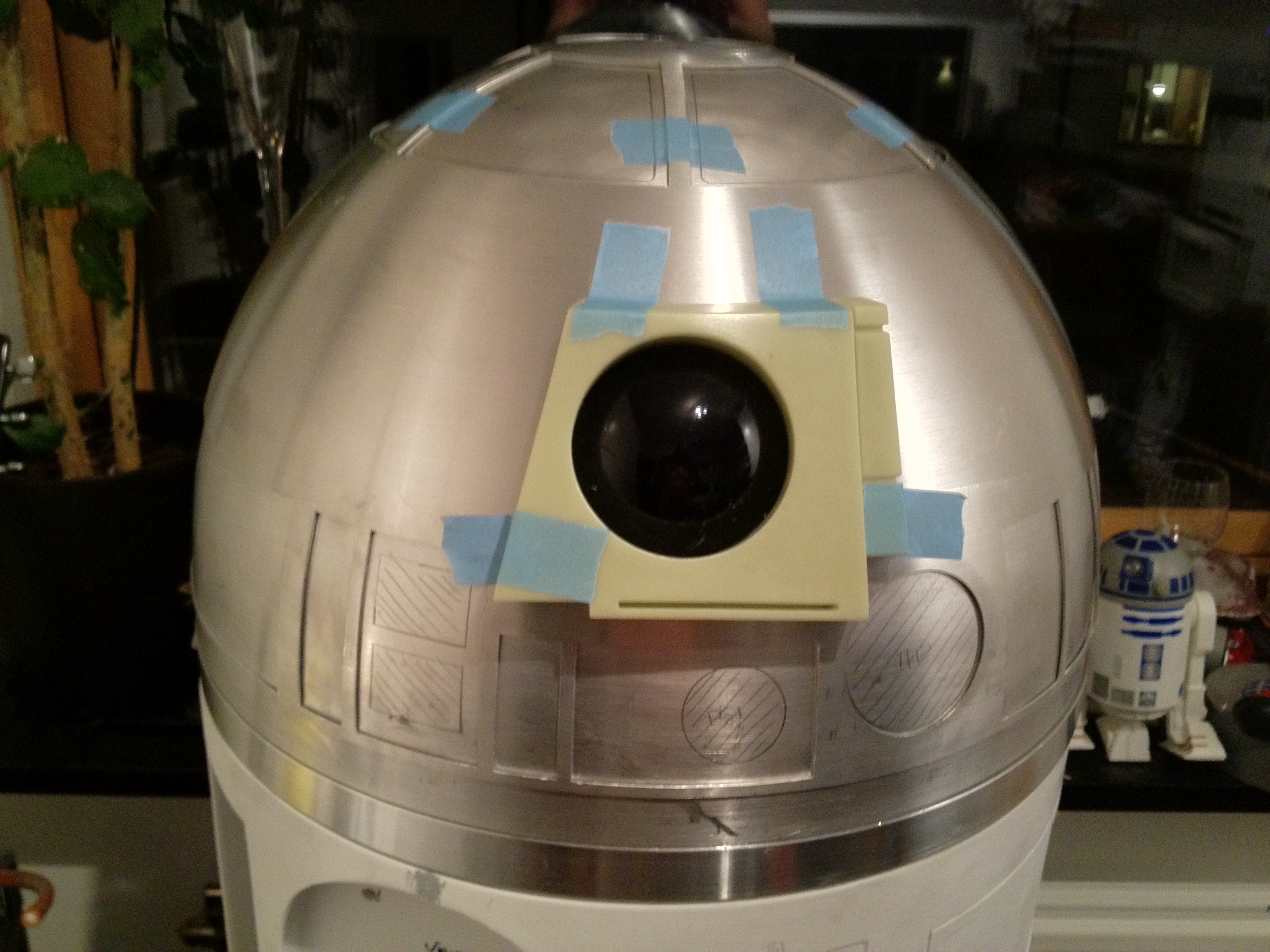
This is the front coin return, all in aluminum. Check out how good it looks on the test fit on the body:

Sure, it has a few minor things that are not perfect, but this is R2 we’re talking about. He should be a bit dented up and not pristine clear. I will do some more sanding and filing later on, but I think it looks good on him =)

Finally, I had to do a comparison shot in-between my old styrene coin return and the new all aluminum one:

A small detail, really, and I have a lot more to fix this week, so why did I focus on redoing something I’ve already done?

Well, why not? =)

I needed to start to learn how to work with the aluminum parts I need to make anyway…

//Micke

By |2016-12-06T00:01:36+01:00March 26th, 2012|R2-D2|Comments Off on Modified Electronics and New Coin Returns

Boxing Day!

After more bloodshed, I’ve continued my work on the battery boxes.

Firstly, I skinned the first one:

It took a little while, as I had to do it in stages. Once the styrene was wrapped around and fixed, I could cut open the openings and finalize the Battery Box:

Here’s the battery box screwed in to the main foot shell and also the motor holder. It will hold the foot shell and the box in place. The battery box will not contain any batteries, but merely serve as an extension for the motor to extend into, and also for the cables to have a bit of slack.

Note the large rim around the opening…

I dressed the lid of the battery box in 1mm styrene, and made the lid slightly larger, in order to get the box opening as smooth as possible.

Closing in the cables… The hole is tapped for M3 at the moment, and I think I will superglue a nut on the back of the inside holder in order for this to have better longevity, as styrene and M3-M4 tapping really exhausts itself quite easily.

Still needs a little bondo and sanding, but it closes pretty tight

Naturally, the screws will be countersunk as well, but I had no M3 screws with the right head for it at home!

Here’s a full view on the mounted battery box…

… and another one.

As you can see, the ribs inside the box are visible on the outside. Sanding + bondo will take that right out, and that’s a project for then it’s time to prep the box for painting!

I’ve also adjusted the position of the screws into the legs, as I realized that the legs were a tad shorter than the official measurements. They had simply slid too far into the ankle, and I placed a few styrene shims on the bottom of the ankle to fix this.

This means the legs are even! =)

As I cannot make the second battery box ready until I have the second foot shell, well .. there’s only one thing to do!

Get down to business!

While making this second foot shell, I’ve tried to avoid the mistakes I made on the first ones. So far, so good. I’ve made a whole new set of mistakes again!

Fortunately, I’ll be the only one who can spot them!

I’ve constructed this foot shell after the same model as the first one, but in a slightly different order, and it seems a lot more stable this time around.

I’ve also sealed up all seams in the foot shell with Tamaiya Putty, for stability. I’ve used a full tube of putty for this foot shell alone!

Here’s a half messy pic of the putty applied to the seams inside the foot.

Tomorrow is the job of adding the bottom details on the foot, and skin the sides. With any lucy, this foot is complete before the weekend!

However, I did spend a few hours on the dome as well.

Drilling, dremeling (and almost burning out my dremel copy, gotta get myself a proper one), sawing, bending and filing. First hole for the HP is done. It took a while!

At this moment, I cannot really say that I’m looking forward to cutting up the pie panels, the other two HP holes, the two PSI holes and the three Logic Displays.

Aluminum is a whole new material to work with, and a whole new array of mistakes to be made.

More blood has been shed…

//Micke

By |2016-12-06T00:01:40+01:00March 14th, 2012|R2-D2|Comments Off on Boxing Day!

Slicing up the head!

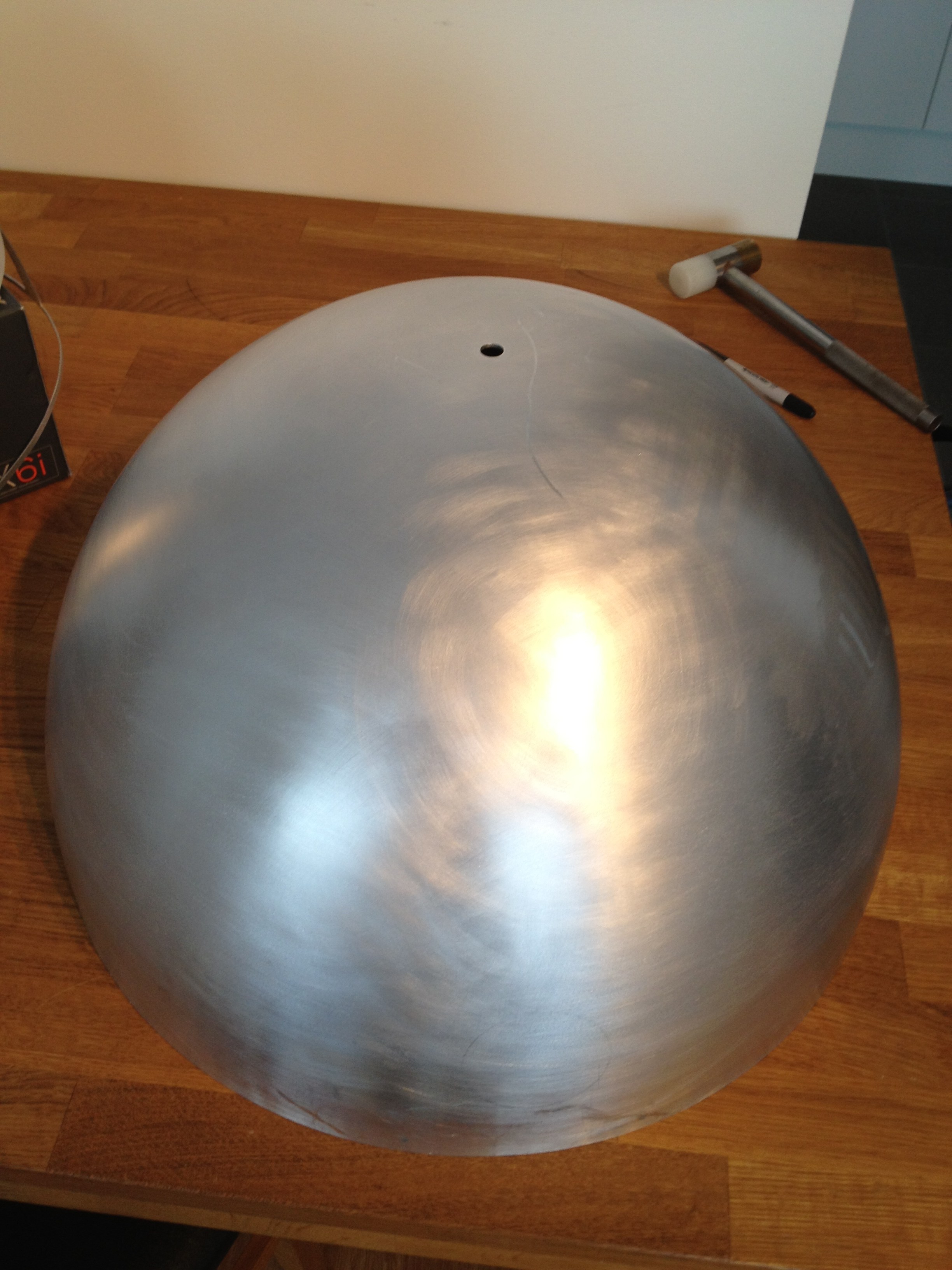
After several attempts at growing my dome (actually I think I managed slightly), and getting my inner dome to fit properly, I decided to go the easy route and split my inner dome in two. Attempt three and four at growing the dome, with proper aluminum tape did not give the desired results.

After sanding the inner dome down to make it slightly less pointy and fit better, I still had a gap at the bottom of the dome, something I did not like!

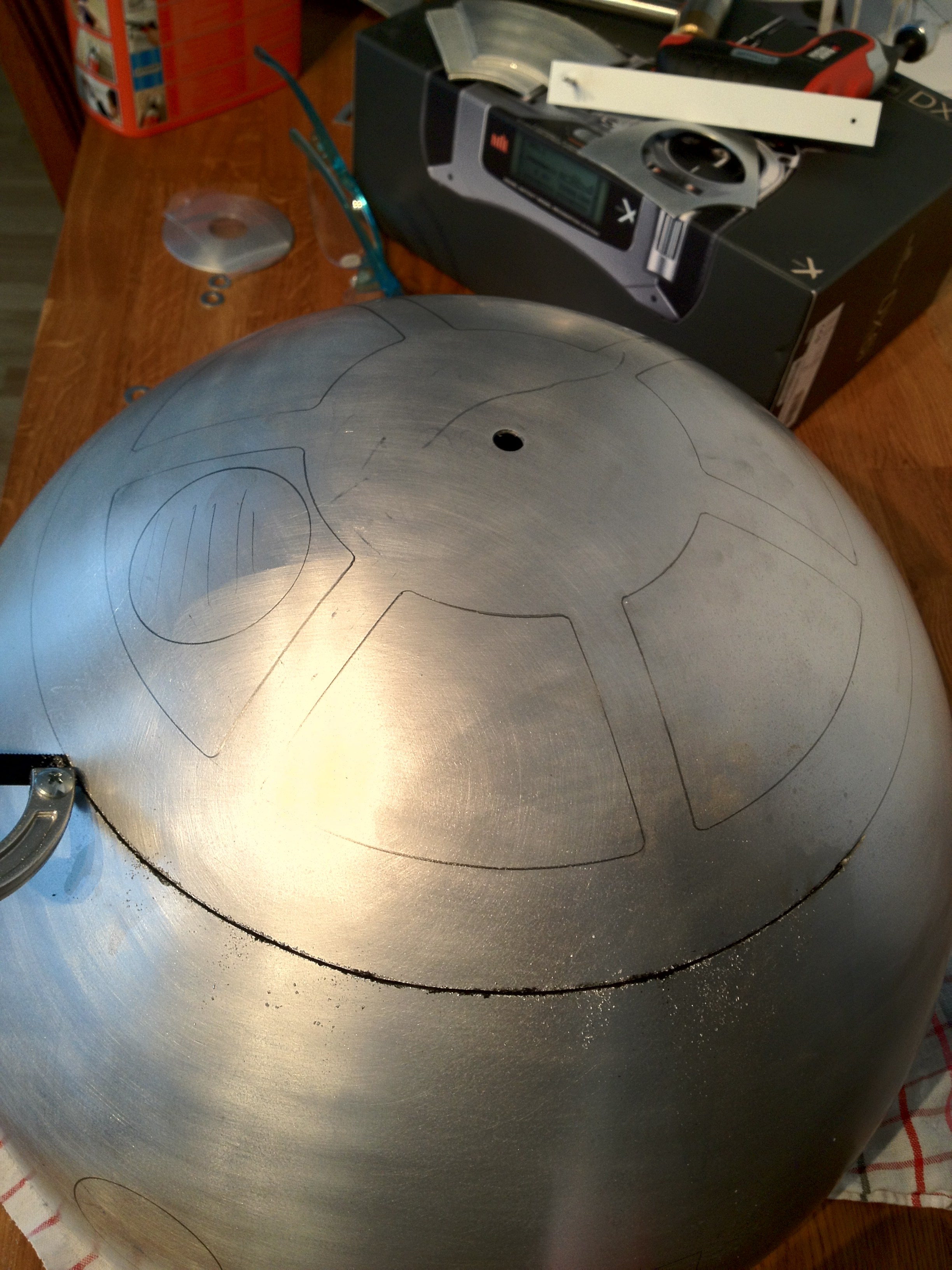
A Sanded inner dome, ready to be sliced open..

So, I marked a line that would be nice and well below the upper panels, and took out my now almost destroyed dremel knockoff and cut a slit in the dome.

Once that was done, out came the blade:

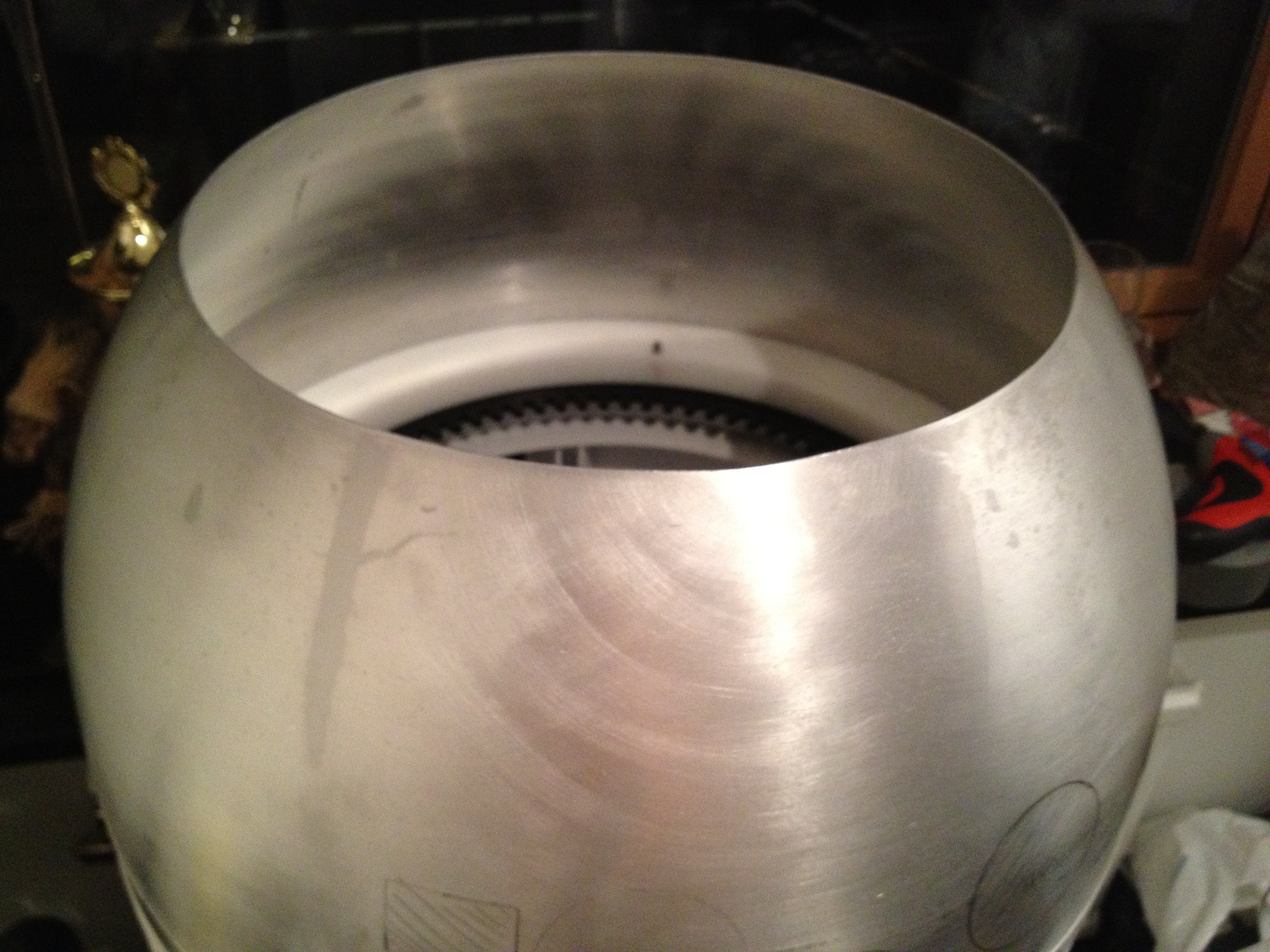
It was hard work, but was easier than I thought it would be! Plenty of silicone lubricant standing by to get the blade to run as smoothly as possible. Once the cut was made, I sanded off the edges, and my R2 now had a rather odd look..

I taped the upper part of the dome to the inside of the outer dome.

I’m lucky enough this is the only large cut I need to make. The inner dome is within acceptable sizes so I do not need to actually cut a few millimeters off it at the bottom, something that would have been really tough, no doubt.

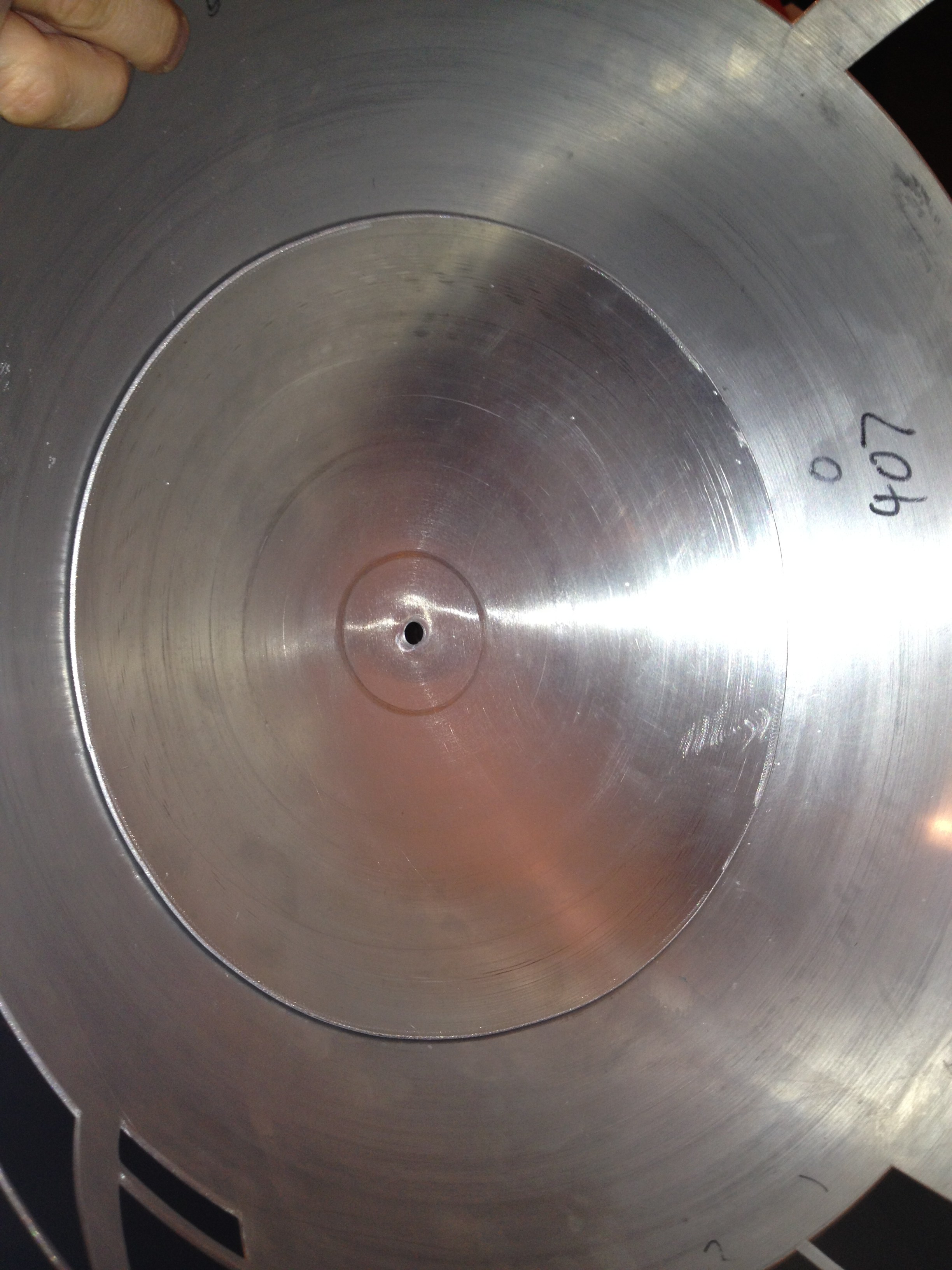
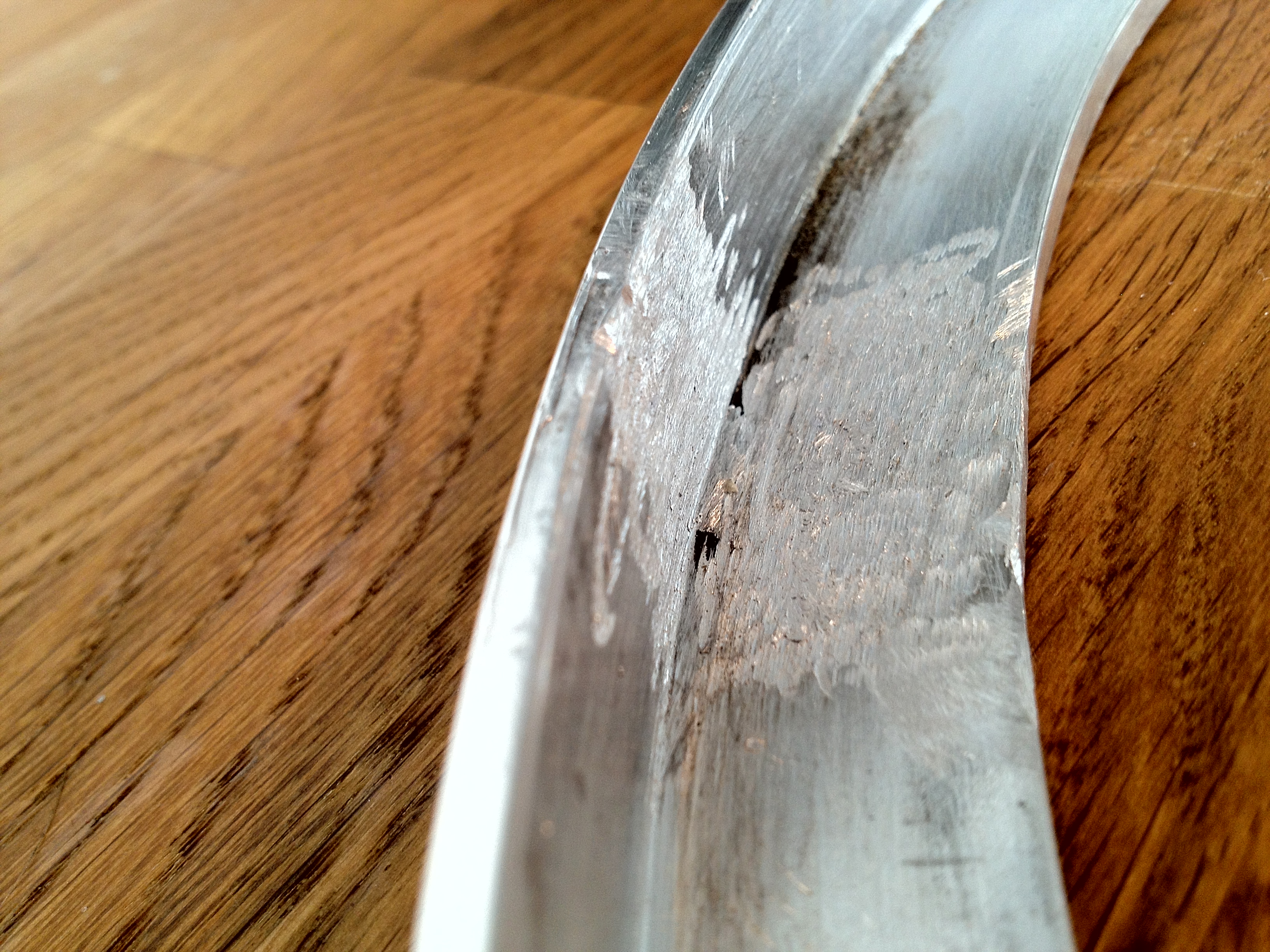
I also got around to remove the rather large remains of when the aluminum ring was welded together. This was almost a centimeter thick of weld residue on the inside of the weld. This prevented the metal ring from spin properly on the body of my R2.

I missed out on a “before” pic, but not too bad for a guy with only a dremel knockoff, eh? =)

Anyway, even though I’ve cut up R2’s head, he doesn’t mind and shows no side effects after the operation…

This really marks the first day of working with the dome. I have not yet decided if I should try and sand off the spin lines from the dome or not. I tried sanding the inner dome to a dull coat, just to get an idea what it would be like, and there are many, many hours of work, should I go down that route.

Since I’m planning on having everything removable (yes, everything) it is something that can be done further down the line, should I chose to do so.

Anyway: I mentioned that I had primed a few parts recently!

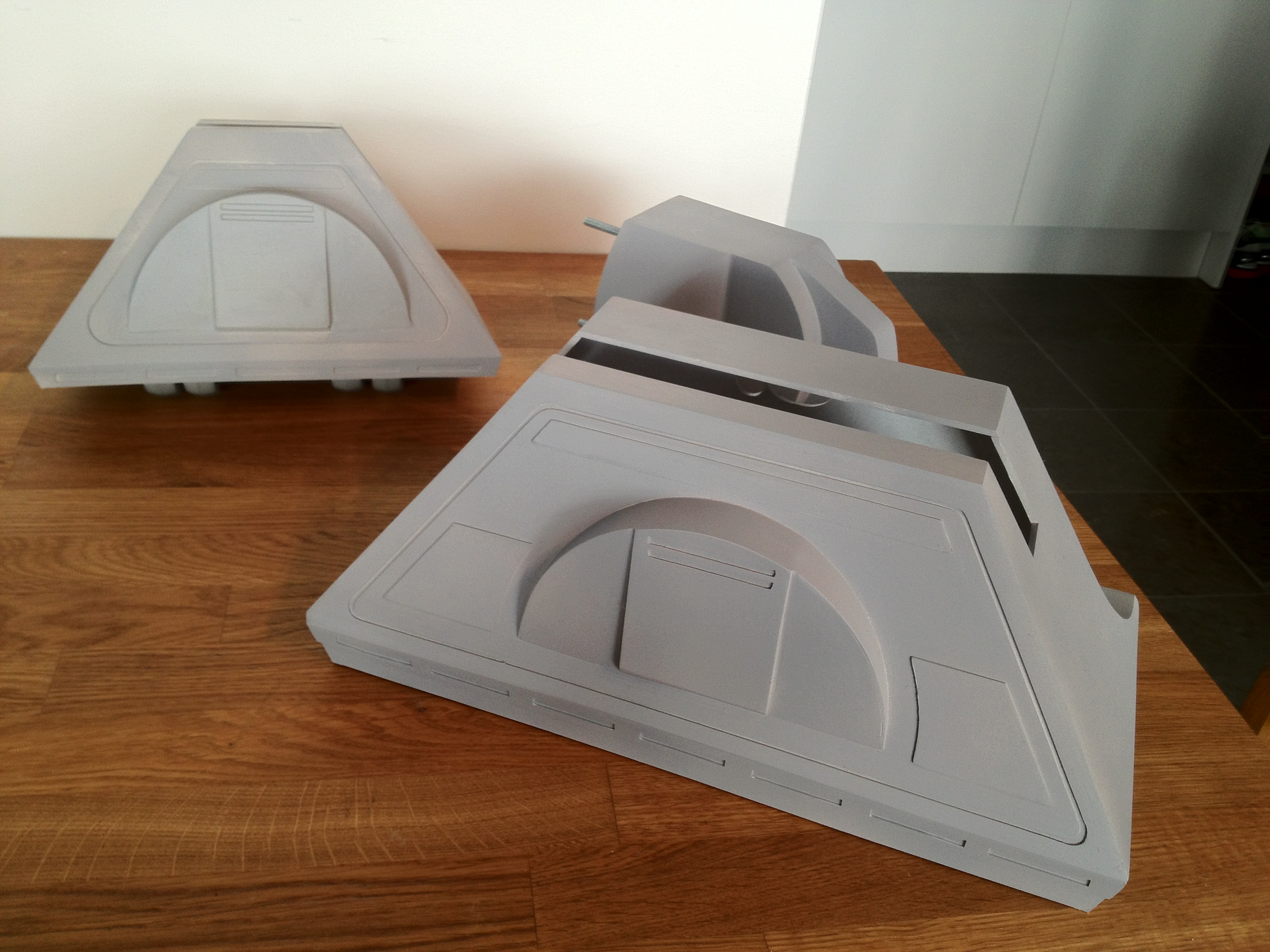
They are mostly ok, but since I’m not used to spray painting, I need to sand and paint again. That’s the idea anyway to get a smooth finish on the droid!

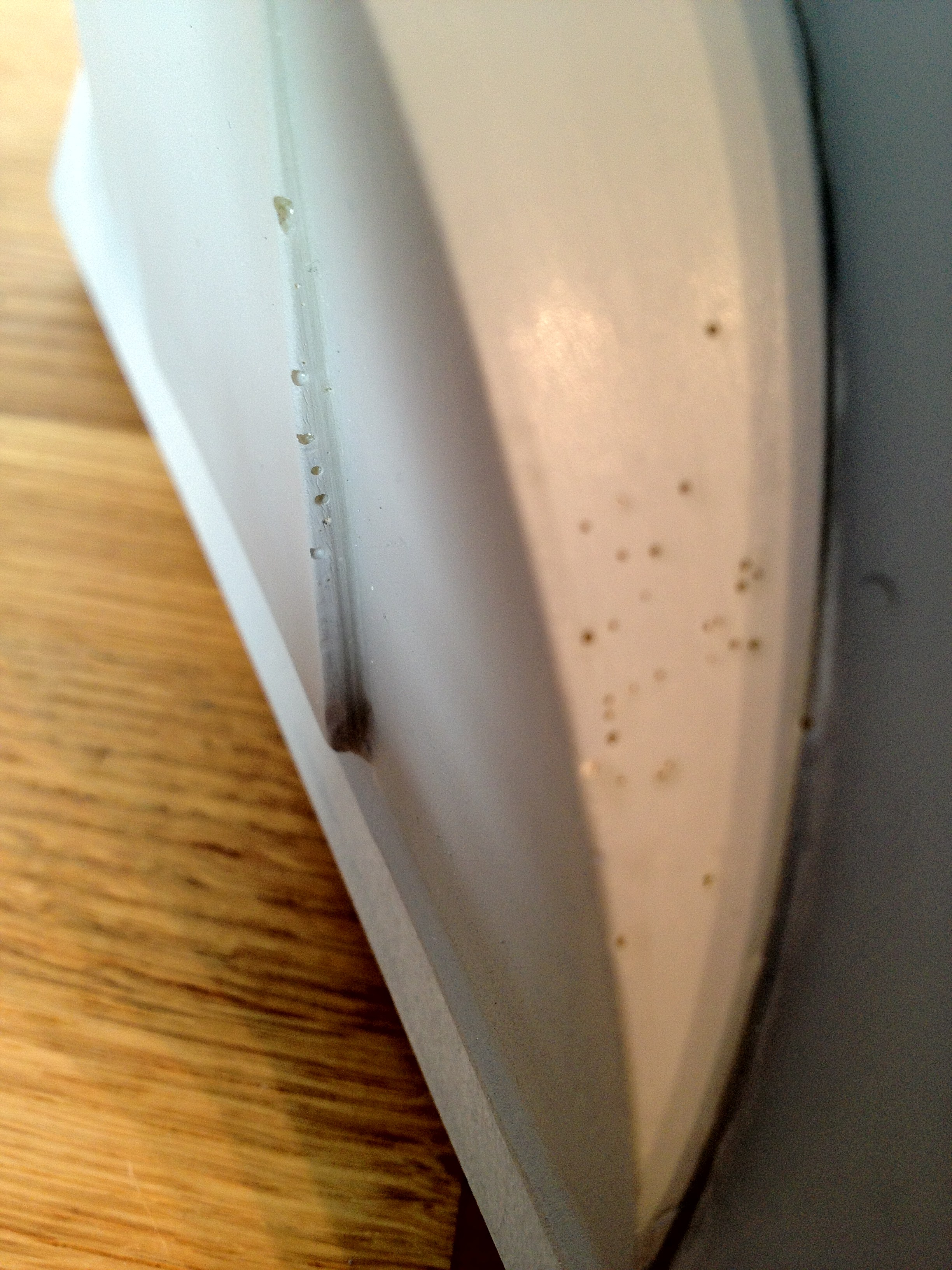
I did notice, however that there are some bubbles in the resin parts and some styrene joints that I need to attend to before continuing the paint job:

Those bubbles will not do! Also, I realized that I need to apply some more putty on the joins between the styrene and resin half-moons that I have on the center foot, since they have not bonded properly!

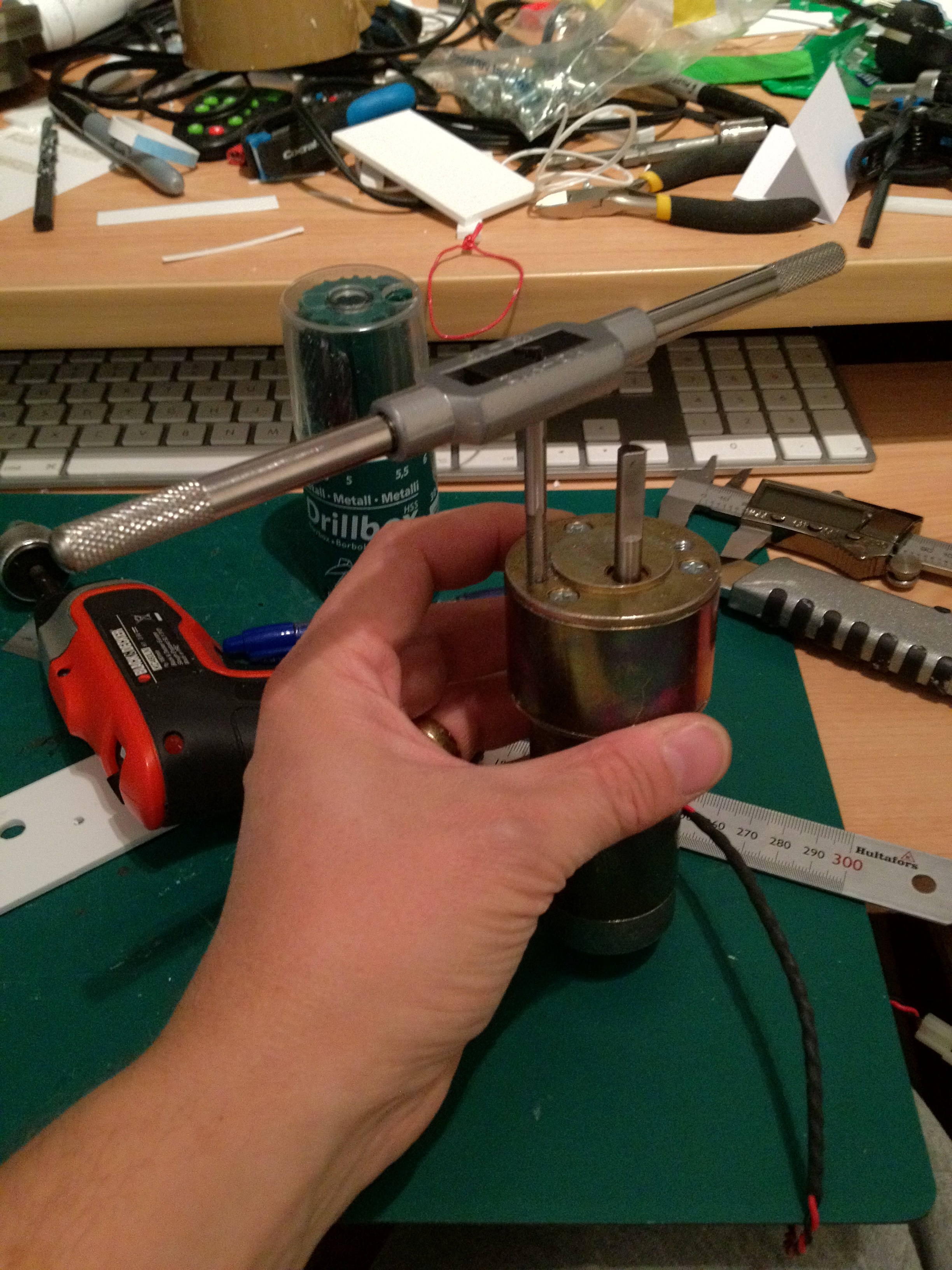
Last thing done today was making a motor mount for my Pittman motor, that will take care of the dome movement. Since this is imported from the US, first step on the agenda was to tap the mounting holes in the motor for european standards. Tapping to M5 here below:

Yes, my desk is suitable messy during this build.

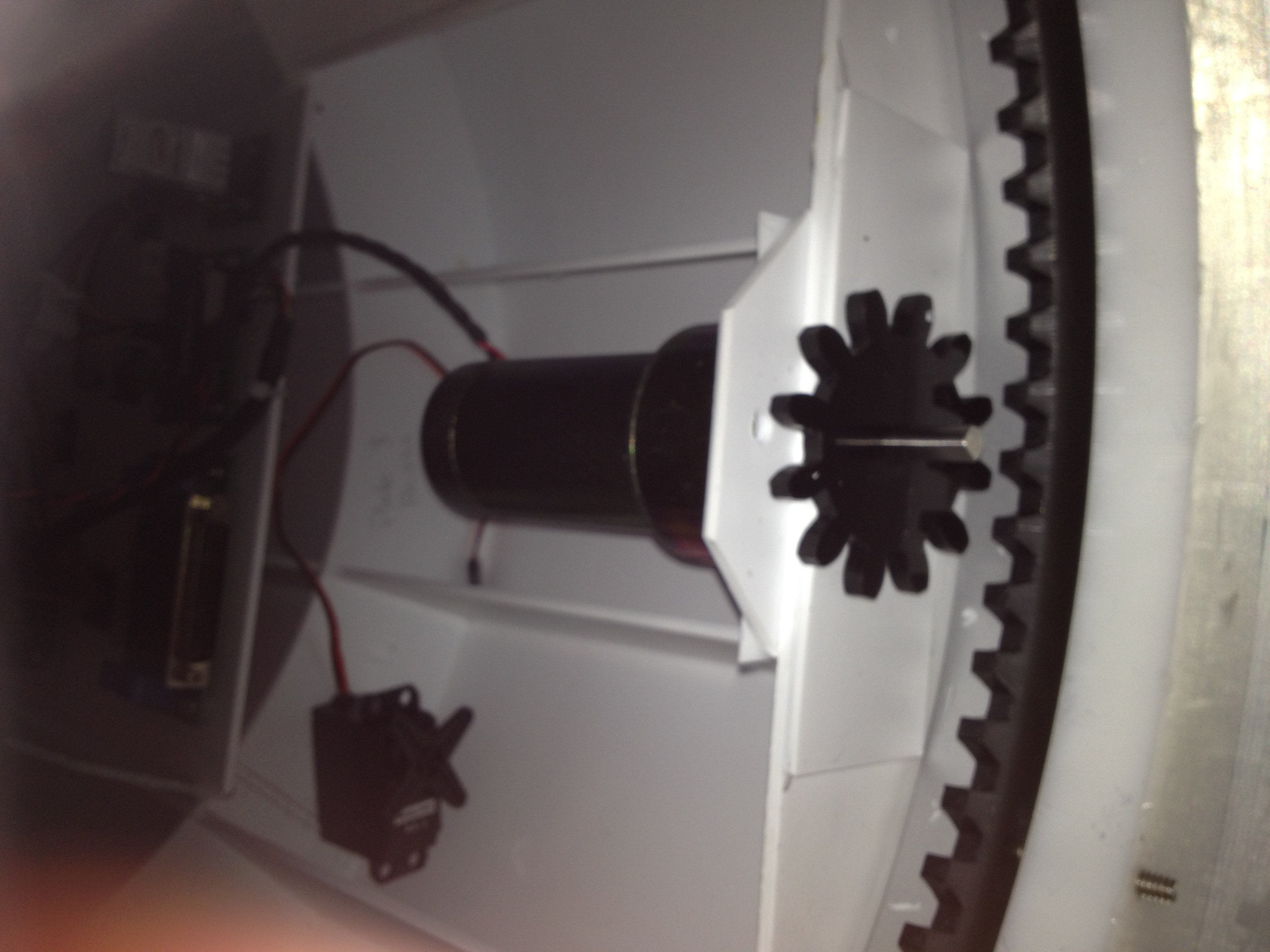
I strengthened the back portion of the upper ring of my droid with 7 more millimeters of styrene, and drilled mounting holes to mount my pittman motor.

I have no idea (yet) how to actually fasten the gear to the motor, so right now it is just lying around the axle, to test the distance, and I’m sure this will provide great traction for my dome movements!

Tomorrow, I’ll see if I can mount the gear properly, and see if I can’t hook up my Syren 10 motor controller as well, to get a first test of the moving head!

Can’t wait!

By |2016-12-06T00:01:43+01:00March 7th, 2012|R2-D2|Comments Off on Slicing up the head!
Go to Top